The 12th Player: How Arena Roars Are Quietly Deciding Championship Runs
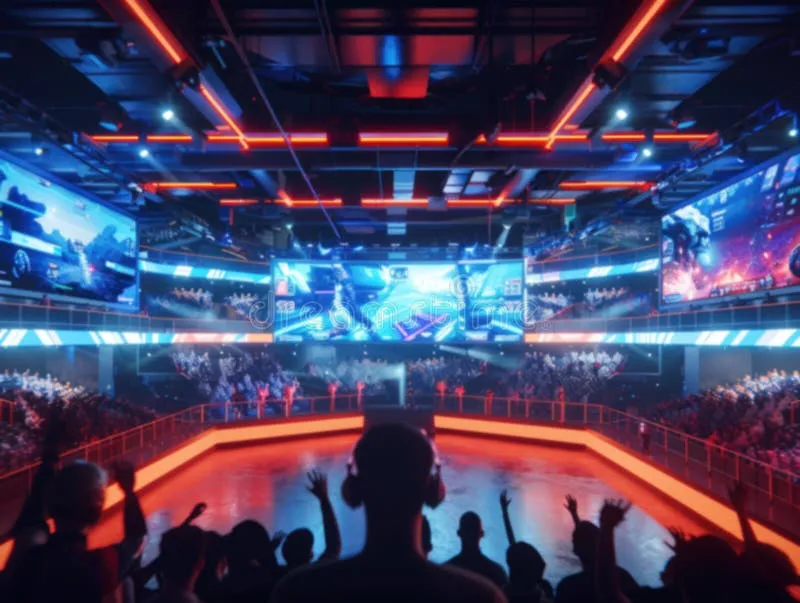
Photo: esports arena crowd cheering packed stadium stage lights, via thumbs.dreamstime.com
Every esports analyst has their favorite stats: opening kill percentages, economy differentials, post-plant win rates. Almost nobody tracks the thing you can feel in your chest when a home crowd erupts at 110 decibels. But ask anyone who's played a major final in front of a packed US arena — Dallas, LA, Brooklyn — and they'll tell you the same thing: the crowd is a player. And it's on somebody's team.
What Actually Happens to Your Brain at 110 Decibels
The science here is messier than you'd think. A wall of noise floods players with adrenaline, which is great for reaction time and terrible for fine motor precision. Some pros describe it as a fog they have to push through; others say it drowns out the internal monologue that ruins big moments.
The bigger effect is on communication. Teams that run tight, layered callouts get scrambled when they can't hear each other. Veteran squads adapt — they compress their comms into short, pre-agreed calls. Younger teams fall apart. It's one reason you'll see a rookie-heavy roster look dominant online and then get flattened in a live final.
And it cuts both ways. A hostile crowd can rattle an opponent into a slow rotate or a panicked peek. The best players treat the noise like weather: real, but not something you get to negotiate with.
The Timeout as a Silencer
Here's a trick that doesn't get enough credit: the strategic timeout isn't just for resetting momentum. It's for killing the crowd.
When an arena is mid-roar and the opposing team calls a full timeout, the energy has nowhere to go. The stadium deflates. Coaches we spoke to admit they'll burn a timeout partly to give their players thirty seconds of silence — a pressure-release valve when the building is against you. It's the esports equivalent of an away team taking a knee to quiet the stadium.
Smart crowd cultures have adapted too. The loudest sections know when to hold noise through a timeout, chanting to keep the pressure on. It's a chess match, and the fans are pieces on the board.
Does Home Field Actually Exist in the US?
Traditional sports treat home-field advantage as gospel — the data backs it up in the NFL and NBA. Esports is newer territory, but the early signals are real.
American events amplify it because of how US fans show up. Our crowds are loud, theatrical, and deeply loyal to org brands in a way that mirrors traditional sports fandom more than old-school LAN culture. When an org with a strong regional identity — think Texas orgs in Dallas, or West Coast teams in the LA scene — plays a hometown major, the effect is noticeable in how opponents describe the experience. Several have admitted off the record that they'd rather face that team literally anywhere else.
The counterargument: top-tier pros are supposed to be noise-proof. The very best, the ones who win MVPs in enemy buildings, seem to genuinely not hear it. But rosters aren't five MVPs. They're five humans, and one of them is usually having a rough day.
Production Teams Are Leaning In
Event producers have caught on. Audio engineering at major US tournaments is now a competitive art form — mic placement tuned to capture crowd reactions, delay timings built to let a roar breathe on stream before the casters talk over it. The broadcast wants you to feel the building, because the building is the product.
Some orgs even script their entrances around it. Pyro, walkout music, crowd prompts on the jumbotron — it's all designed to build the noise floor before a single round is played. If your team feeds off energy, that head start matters.
The Meta Nobody Patches
Here's the takeaway: crowd noise is a skill gap that doesn't show up in practice servers. Teams that rehearse with simulated noise — blast speakers during scrims, run comms drills with distractions — are quietly investing in an edge that doesn't appear in any patch notes.
So the next time you watch a clutch defuse in front of a screaming arena and the player's hands stay steady, appreciate it. That's not just talent. That's training against the loudest opponent in the building.